


Resource Center
Communication and sharing promote growth
Joining Hands for Development!
Communication and sharing promote growth
Joining Hands for Development!


To enhance the range and capacity of electric vehicles, Power Battery Packs are transitioning from single-layer layouts to Multi-layer Stacking Structures. This shift significantly improves Energy Density, while also introducing entirely new structural challenges. This article will explore three aspects: core challenges, mainstream solutions, and future technological directions.
1-Core Challenges: Mechanical Challenges of Multi-layer Stacking
Expanding Battery Packs from a single layer to Multiple Layers is far from simple stacking. It reshapes the internal mechanical environment and external Load Paths, presenting four core challenges:
a.Vertical Load Surge and Material Creep Risk
・In Multi-layer Structures, the weight of Cells, Modules, and Structural Components accumulates layer by layer. The Static Compressive Load borne by the bottom layer is significantly higher than that of the top layer.
・This sustained High-Stress environment poses severe tests to the Long-Term Performance of materials, particularly Anti-Creep Performance (the slow Plastic Deformation of materials under Constant Stress over time).
・If Interlayer Supports or Cell Fixation Components undergo Creep, it may lead to Preload Relaxation, affecting Cell Cycle Life and Interface Contact Stability. Therefore, identifying materials that combine Lightweight properties with excellent Anti-Creep Characteristics is crucial.
b.Expansion ForceStacking Effect and Structural Stability
・Lithium-Ion Batteries experience a "Breathing Effect" during Charging and Discharging due to Volume Changes in Electrode Materials, leading to Cell Expansion. In Multi-layer Stacking Structures, Expansion Forces accumulate layer by layer, causing the bottom-layer Modules to withstand enormous pressure.
・This Cyclic Stress can easily trigger Casing Bulging, Seal Failure, Structural Component Compression, Cell Short Circuits, and accelerated Battery Performance Degradation. Effective control requires Built-in Sensors for Real-Time Monitoring combined with Digital Simulation to guide Structural Optimization Design.
c.Core Contradiction Between Space Utilization and Energy Density
・Addressing Gravity and Expansion Forces requires Reinforced Structures (such as adding Crossbeams or thickening Plates), but this occupies valuable space and increases weight, conflicting with the core goals of improving Volumetric Energy Density and Gravimetric Energy Density.
・The solution lies in Structural Optimization and the application of Efficient Materials, driving the transition of Battery Packs towards Multi-Material Hybrid Designs.
d.Collision LoadTransfer Path and Safety Redundancy Upgrade
・The Increased Height of Battery Packs intensifies Mechanical Loads during Side Impacts or Bottom Impacts; the Heightened Structure amplifies the Lever Effect, placing higher demands on Connection Point Strength and the Battery Pack's Own Stiffness.
・The use of Impact-Resistant Materials and Integrated Design is necessary to optimize Force Transfer and Energy Absorption, ensuring Cell Safety under Extreme Conditions, thereby promoting the development of Cell-to-Body Integration (CTC) technology, making the Battery Pack an integral part of the Vehicle Body Structure.
2- Comparative Analysis of Mainstream Structural Solutions
To address these challenges, the industry has explored various innovative solutions:
a.One-Piece Die-Cast Tray
・Advantages: High Integration, reduced Part Count, improved Overall Stiffness, Consistency, and Sealing. The Process supports Complex Geometries, facilitating the integration of Cooling, Reinforcing Ribs, and Mounting Points. The Monolithic Structure helps manage Complex Stresses.
・Challenges: Integral Die-Casting of Multi-Layer Frames imposes extremely high demands on Equipment, Molds, and Processes, making it costly. Post-Collision Repair is difficult or impossible. The Monolithic Rigid Structure may lack the Flexibility to manage Differential Expansion Forces between Layers.
b.Multi-Level Frame Modular
・Advantages: Flexible Design and Manufacturing, facilitating Production, Maintenance, and Replacement. Naturally suited for Multi-Material Hybrid Designs, allowing optimization of Performance and Cost for different Levels. Drawing on the "Quasi-Isotropic Lamination" concept of Composite Materials to optimize Overall Mechanical Response and disperse Stress.
・Challenges: Numerous Components and Connectors, Complex Assembly, Accumulated Tolerances affecting Precision and Preload. Numerous Connection Interfaces (Bolts, Rivets) are Potential Failure Points and add weight.
c.Hybrid Material Sandwich Structure
・Advantages: Excellent Lightweight Efficiency and extremely high Specific Stiffness (High-Strength Panels + Lightweight Core Materials such as Foam/Aluminum Honeycomb). Strong Bending Resistance, with Core Materials offering both Thermal Insulation and Energy Absorption Characteristics, enhancing Thermal Safety and Collision Safety. Aligns with the trend of Multi-Functional Integration.
・Challenges: Complex Manufacturing Process and high cost. The Interfacial Bond Strength and Long-Term Durability between Panels and Core Materials are critical. Core Materials must possess excellent Compressive Creep Resistance.
d.Bionic Honeycomb Structure
・Advantages: Theoretically an ideal Bionic Design (mimicking the HexagonalHoneycomb) for achieving Ultimate Lightweight, High Stiffness, and Compressive Strength. Provides Uniform Support with strong Impact Energy Absorption Capability.
・Challenges: Extremely complex Manufacturing and high cost, with significant Integration Difficulty with Cooling Systems etc. Currently primarily in the Frontier Research stage, requiring more time for large-scale Commercial Application.
3- Key Technological Breakthrough Directions
Future key breakthroughs in solving the Design Challenges of Multi-layer Stacking lie in:
a.Material and Process Innovation for Lightweight and Stiffness Balance
・Materials: Continuous optimization of CFRP, Aluminum Alloys, Magnesium Alloys; development of new Multifunctional Polymers and Composite Materials combining Low Creep, High Insulation, Good Thermal Conductivity, and Easy Processability.
・Processes: Development of Advanced Connection Technologies (Resistance Spot Welding, Laser Welding, Ultrasonic Welding) to achieve reliable, lightweight Multi-Material Connections.
b. Adaptive Management of Expansion Forces
Shifting the approach from "Rigid Resistance" to "Flexible Adaptation", creating Dynamic Response Systems to keep Cells in the Optimal Stress Environment throughout their Lifecycle.
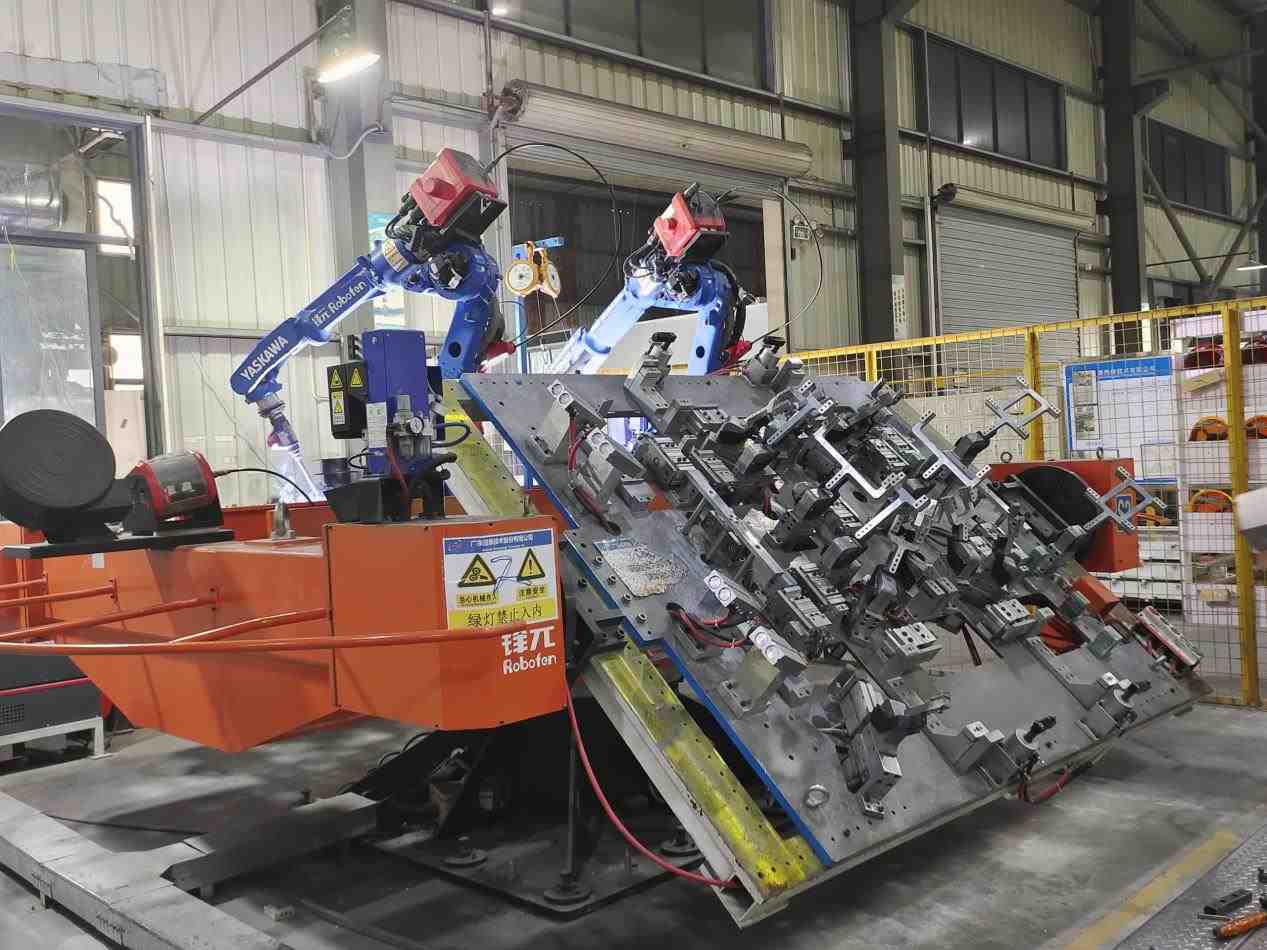
Figure 1: Robotic laser welding of battery trays
c.Interlayer Connection and Integration Revolution
・Connection Technologies: Evolution from BoltMechanical Connections to Structural AdhesiveBonding and Advanced Welding for more uniform Stress Distribution, Good Sealing, and Fatigue Resistance.
・Ultimate Integration: CTC/CTB (Cell-to-Chassis/Body) is an important future direction for Battery PackIntegration. By eliminating Independent Housings and directly integrating Cells or Modules into the Chassis, the Multi-layer Stacking itself becomes a Vehicle Body Structural Component (such as Crossbeams or Floors), fundamentally solving Space Constraints and maximizing Battery Structural Functionality. Achieving this technology requires Deep Collaboration across multiple fields including Batteries, Structures, Thermal Management, and Safety, representing the Ultimate Form of the "Structure as Function" concept.
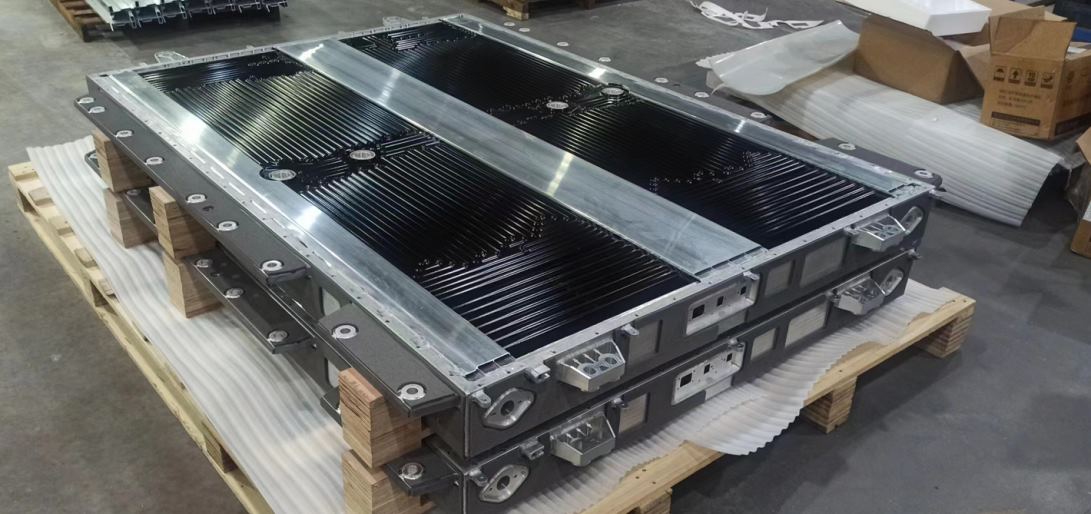
Figure 2: EV Battery tray
Multi-layer Stacking is an inevitable choice for increasing BatteryEnergy Density, but it also brings enormous challenges in Structure, Expansion Forces, and Safety. The solution lies in Material Innovation, Bionic Structural Optimization, and Intelligent Management of Expansion Forces. Ultimately, Battery Packs will Deeply Integrate with Vehicle Bodies, becoming an integrated "Energy Chassis".
We will regularly update you on technologies and information related to thermal design and lightweighting, sharing them for your reference. Thank you for your attention to Walmate.
Scan to follow
测试测试测试测试测试测试测试测试测试测试测试测试测试测试测试测试测试测试测试测试测试测试测试测试测试测试测试测试测试测试测试测试测试测试测试测试测试测试测试测试测试测试测试测试测试测试测试测试测试测试测试测试测试测试测试测试测试测试测试
测试测试测试测试测试测试测试测试测试测试测试测试测试测试测试测试测试测试测试测试测试测试测试测试测试测试测试测试测试测试测试测试测试测试测试测试测试测试测试测试测试测试测试测试测试测试测试测试测试测试测试测试测试测试测试测试测试测试测试
测试测试测试测试测试测试测试测试测试测试测试测试测试测试测试测试测试测试测试测试测试测试测试测试测试测试测试测试测试测试测试测试测试测试测试测试测试测试测试测试测试测试测试测试测试测试测试测试测试测试测试测试测试测试测试测试测试测试测试
测试测试测试测试测试测试测试测试测试测试测试测试测试测试测试测试测试测试测试测试测试测试测试测试测试测试测试测试测试测试测试测试测试测试测试测试测试测试测试测试测试测试测试测试测试测试测试测试测试测试测试测试测试测试测试测试测试测试测试
测试测试测试测试测试测试测试测试测试测试测试测试测试测试测试测试测试测试测试测试测试测试测试测试测试测试测试测试测试测试测试测试测试测试测试测试测试测试测试测试测试测试测试测试测试测试测试测试测试测试测试测试测试测试测试测试测试测试测试
测试测试测试测试测试测试测试测试测试测试测试测试测试测试测试测试测试测试测试测试测试测试测试测试测试测试测试测试测试测试测试测试测试测试测试测试测试测试测试测试测试测试测试测试测试测试测试测试测试测试测试测试测试测试测试测试测试测试测试
测试测试测试测试测试测试测试测试测试测试测试测试测试测试测试测试测试测试测试测试测试测试测试测试测试测试测试测试测试测试测试测试测试测试测试测试测试测试测试测试测试测试测试测试测试测试测试测试测试测试测试测试测试测试测试测试测试测试测试
测试测试测试测试测试测试测试测试测试测试测试测试测试测试测试测试测试测试测试测试测试测试测试测试测试测试测试测试测试测试测试测试测试测试测试测试测试测试测试测试测试测试测试测试测试测试测试测试测试测试测试测试测试测试测试测试测试测试测试
测试测试测试测试测试测试测试测试测试测试测试测试测试测试测试测试测试测试测试测试测试测试测试测试测试测试测试测试测试测试测试测试测试测试测试测试测试测试测试测试测试测试测试测试测试测试测试测试测试测试测试测试测试测试测试测试测试测试测试
测试测试测试测试测试测试测试测试测试测试测试测试测试测试测试测试测试测试测试测试测试测试测试测试测试测试测试测试测试测试测试测试测试测试测试测试测试测试测试测试测试测试测试测试测试测试测试测试测试测试测试测试测试测试测试测试测试测试测试
测试测试测试测试测试测试测试测试测试测试测试测试测试测试测试测试测试测试测试测试测试测试测试测试测试测试测试测试测试测试测试测试测试测试测试测试测试测试测试测试测试测试测试测试测试测试测试测试测试测试测试测试测试测试测试测试测试测试测试
测试测试测试测试测试测试测试测试测试测试测试测试测试测试测试测试测试测试测试测试测试测试测试测试测试测试测试测试测试测试测试测试测试测试测试测试测试测试测试测试测试测试测试测试测试测试测试测试测试测试测试测试测试测试测试测试测试测试测试
测试测试测试测试测试测试测试测试测试测试测试测试测试测试测试测试测试测试测试测试测试测试测试测试测试测试测试测试测试测试测试测试测试测试测试测试测试测试测试测试测试测试测试测试测试测试测试测试测试测试测试测试测试测试测试测试测试测试测试
测试测试测试测试测试测试测试测试测试测试测试测试测试测试测试测试测试测试测试测试测试测试测试测试测试测试测试测试测试测试测试测试测试测试测试测试测试测试测试测试测试测试测试测试测试测试测试测试测试测试测试测试测试测试测试测试测试测试测试
测试测试测试测试测试测试测试测试测试测试测试测试测试测试测试测试测试测试测试测试测试测试测试测试测试测试测试测试测试测试测试测试测试测试测试测试测试测试测试测试测试测试测试测试测试测试测试测试测试测试测试测试测试测试测试测试测试测试测试
测试测试测试测试测试测试测试测试测试测试测试测试测试测试测试测试测试测试测试测试测试测试测试测试测试测试测试测试测试测试测试测试测试测试测试测试测试测试测试测试测试测试测试测试测试测试测试测试测试测试测试测试测试测试测试测试测试测试测试
测试测试测试测试测试测试测试测试测试测试测试测试测试测试测试测试测试测试测试测试测试测试测试测试测试测试测试测试测试测试测试测试测试测试测试测试测试测试测试测试测试测试测试测试测试测试测试测试测试测试测试测试测试测试测试测试测试测试测试
测试测试测试测试测试测试测试测试测试测试测试测试测试测试测试测试测试测试测试测试测试测试测试测试测试测试测试测试测试测试测试测试测试测试测试测试测试测试测试测试测试测试测试测试测试测试测试测试测试测试测试测试测试测试测试测试测试测试测试
测试测试测试测试测试测试测试测试测试测试测试测试测试测试测试测试测试测试测试测试测试测试测试测试测试测试测试测试测试测试测试测试测试测试测试测试测试测试测试测试测试测试测试测试测试测试测试测试测试测试测试测试测试测试测试测试测试测试测试
测试测试测试测试测试测试测试测试测试测试测试测试测试测试测试测试测试测试测试测试测试测试测试测试测试测试测试测试测试测试测试测试测试测试测试测试测试测试测试测试测试测试测试测试测试测试测试测试测试测试测试测试测试测试测试测试测试测试测试