



Resource Center
Communication and sharing promote growth
Joining Hands for Development!
Communication and sharing promote growth
Joining Hands for Development!


This article attempts to sort out the innovation path of HVDC system heat dissipation technology under the background of AI computing power explosion, focusing on two major directions: liquid cooling synergy and material upgrade. The content is compiled from industry public information. If there are any omissions, please correct them.
1- The rise of HVDC and the inevitability of upgraded cooling demand
The explosive growth of AI computing power has significantly increased the power density of data centers (single cabinet exceeds 100kW), driving the demand for high-efficiency power supply systems. Traditional UPS faces efficiency and floor space challenges, while HVDC systems are rapidly becoming the mainstream power supply solution for AI data centers with their high efficiency, low loss, small size and high reliability. This directly drives the rapid growth of the HVDC market and the surge in penetration in AI data centers. At the same time, AI demand also prompts HVDC technology to develop to higher voltage levels (such as 750V and 1000V systems) to further improve efficiency and power carrying capacity.
a. AI computing power explosion and energy efficiency requirements
In order to meet high energy efficiency standards (such as data center PUE≤1.5/≤1.3), HVDC cooling technology needs to achieve:
· Efficient cooling design, using liquid cooling technology to cope with high power density; precise control of cooling parameters.
· Optimization of heat transfer media, preferential use of deionized water, and selection of stable fluids that prevent phase separation (such as PCD) in special scenarios.
·The radiator performance is upgraded, and high thermal conductivity materials are used; the special flow channel design improves the heat exchange efficiency.
·Dynamic temperature control and monitoring, real-time monitoring of key point temperatures; equipped with diagnostic equipment to predict faults.
·Redundancy and reliability design, such as: N+1 redundant configuration of cooling system, dual-circuit chilled water pipe network to prevent single point failure.
·Emergency heat dissipation capacity, support heat dissipation under extreme working conditions.
·Environmental adaptability, ensure stable operation at an ambient temperature of 15-35℃, and take into account moisture-proof ventilation.
b. Deepening application of third-generation semiconductors (SiC/GaN)
The surge in AI computing power has promoted 800V high-voltage DC architecture to become a new trend in data centers:
·SiC/GaN gradually replaces traditional silicon-based devices with its high power density, high-frequency switching, and low loss characteristics.
·Significantly improve system efficiency.
·Reduce material costs and enhance reliability.
c. Energy efficiency advantages of HVDC vs. AC power supply and its heat dissipation impact
The requirements of HVDC architecture for heat dissipation systems are mainly reflected in high power density, efficient cooling methods, redundant design, environmental adaptability, energy efficiency optimization, and fast fault recovery. These requirements jointly determine the complexity and challenges of HVDC systems in design and operation.
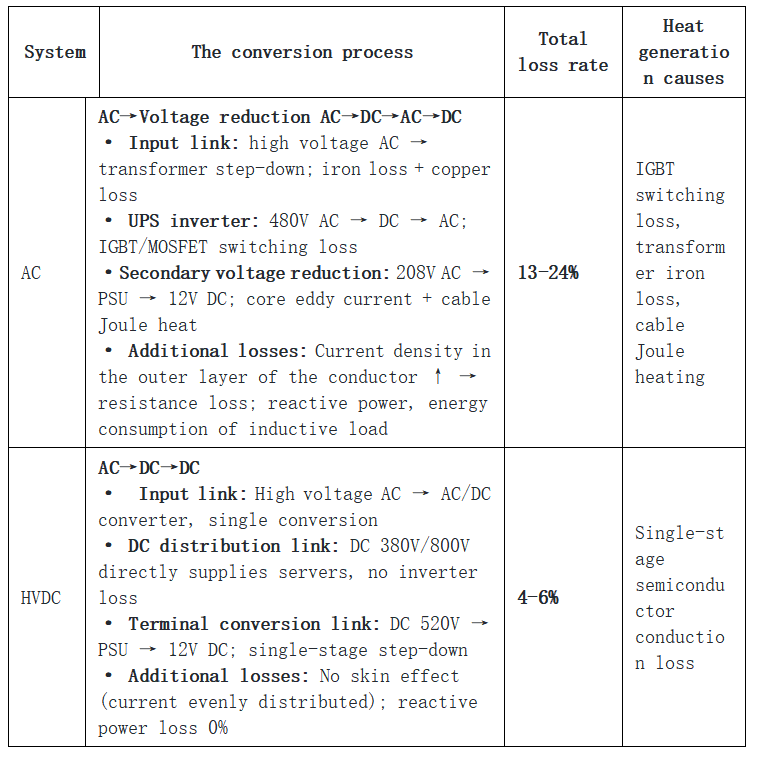
Table 1: Breakdown of the root causes of differences in HVDC vs AC energy conversion losses
2- Innovation core: Liquid cooling synergy and material upgrade solutions
a. Liquid cooling system: Generational transition from edge to mainstream
Liquid cooling penetration rate has risen rapidly, AI computing power drives GPU power consumption to 1000W, forcing air cooling to transform, and edge scenarios need to adapt to the extreme temperature range of -30℃~60℃.
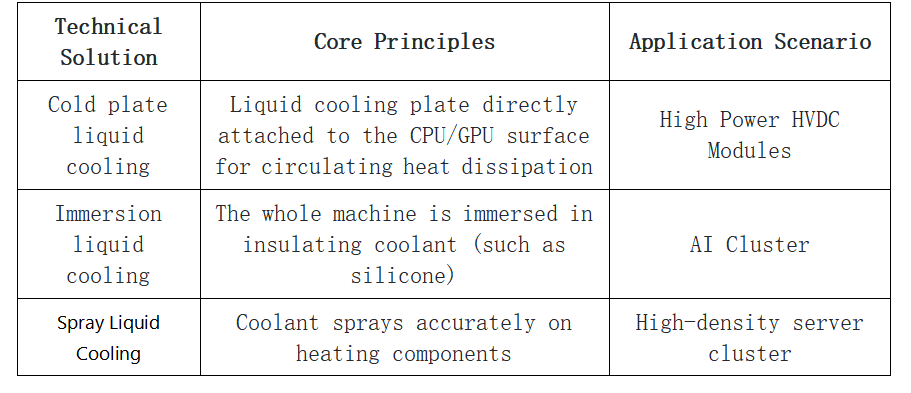
Table 2: Generational transition of technology paths
b. Material upgrade: a key breakthrough in coping with extreme thermal challenges
Material upgrade promotes breakthroughs in heat dissipation performance: Optimize thyristor thermal management through high thermal conductivity interface materials, combine aluminum nitride ceramic substrates (thermal conductivity ≥ 180W/mK) to enhance the heat dissipation capacity of SiC/GaN devices, and use a composite liquid cooling structure to support high power density. At the system level, N+1 redundant liquid cooling architecture, intelligent temperature control strategy and 800V withstand voltage pipeline design are used to achieve safe and efficient collaborative heat dissipation.
3-Technical Challenges and Opportunities in the Cooling Industry Chain
a. Key Challenges: Standardization and Compatibility Bottlenecks
The lack of uniformity in the interface of the chip-level cold plate and the difference in the withstand voltage of the cabinet-level pipeline (500V~800V) lead to poor compatibility and increase the cost of transformation; the cold plate and immersion technology routes are separated, and the lack of coolant insulation standards exacerbates the fragmentation of the industry; there are hidden dangers in the operation and maintenance link such as insufficient leakage detection mechanism and blank standards for coolant performance attenuation. The root cause lies in the ecological division of the three parties of chip vendors/server vendors/liquid cooling solution providers, forming an "islandization" dilemma with unclear responsibilities.
b. Collaboration Opportunities: Technical Collaboration and Industrial Collaboration
The chip layer promotes the standardization of cold plate interfaces, and the system layer links HVDC load and cooling flow rate through AI temperature control algorithms; the industrial layer relies on ODCC to establish interface and coolant standards, and shortens the deployment cycle with modular whole machines; innovates coolant regeneration technology and equipment leasing models to reduce costs, and covers leakage risks through insurance mechanisms to achieve three-dimensional collaboration of technology-industry-finance.
At present, HVDC cooling technology still faces challenges such as standardization and compatibility, but industrial collaboration has shown signs of breakthrough. This article is only a temporary observation, and we look forward to discussing optimization directions with colleagues in the industry.
We will regularly update you on technologies and information related to thermal design and lightweighting, sharing them for your reference. Thank you for your attention to Walmate.
Scan to follow
测试测试测试测试测试测试测试测试测试测试测试测试测试测试测试测试测试测试测试测试测试测试测试测试测试测试测试测试测试测试测试测试测试测试测试测试测试测试测试测试测试测试测试测试测试测试测试测试测试测试测试测试测试测试测试测试测试测试测试
测试测试测试测试测试测试测试测试测试测试测试测试测试测试测试测试测试测试测试测试测试测试测试测试测试测试测试测试测试测试测试测试测试测试测试测试测试测试测试测试测试测试测试测试测试测试测试测试测试测试测试测试测试测试测试测试测试测试测试
测试测试测试测试测试测试测试测试测试测试测试测试测试测试测试测试测试测试测试测试测试测试测试测试测试测试测试测试测试测试测试测试测试测试测试测试测试测试测试测试测试测试测试测试测试测试测试测试测试测试测试测试测试测试测试测试测试测试测试
测试测试测试测试测试测试测试测试测试测试测试测试测试测试测试测试测试测试测试测试测试测试测试测试测试测试测试测试测试测试测试测试测试测试测试测试测试测试测试测试测试测试测试测试测试测试测试测试测试测试测试测试测试测试测试测试测试测试测试
测试测试测试测试测试测试测试测试测试测试测试测试测试测试测试测试测试测试测试测试测试测试测试测试测试测试测试测试测试测试测试测试测试测试测试测试测试测试测试测试测试测试测试测试测试测试测试测试测试测试测试测试测试测试测试测试测试测试测试
测试测试测试测试测试测试测试测试测试测试测试测试测试测试测试测试测试测试测试测试测试测试测试测试测试测试测试测试测试测试测试测试测试测试测试测试测试测试测试测试测试测试测试测试测试测试测试测试测试测试测试测试测试测试测试测试测试测试测试
测试测试测试测试测试测试测试测试测试测试测试测试测试测试测试测试测试测试测试测试测试测试测试测试测试测试测试测试测试测试测试测试测试测试测试测试测试测试测试测试测试测试测试测试测试测试测试测试测试测试测试测试测试测试测试测试测试测试测试
测试测试测试测试测试测试测试测试测试测试测试测试测试测试测试测试测试测试测试测试测试测试测试测试测试测试测试测试测试测试测试测试测试测试测试测试测试测试测试测试测试测试测试测试测试测试测试测试测试测试测试测试测试测试测试测试测试测试测试
测试测试测试测试测试测试测试测试测试测试测试测试测试测试测试测试测试测试测试测试测试测试测试测试测试测试测试测试测试测试测试测试测试测试测试测试测试测试测试测试测试测试测试测试测试测试测试测试测试测试测试测试测试测试测试测试测试测试测试
测试测试测试测试测试测试测试测试测试测试测试测试测试测试测试测试测试测试测试测试测试测试测试测试测试测试测试测试测试测试测试测试测试测试测试测试测试测试测试测试测试测试测试测试测试测试测试测试测试测试测试测试测试测试测试测试测试测试测试
测试测试测试测试测试测试测试测试测试测试测试测试测试测试测试测试测试测试测试测试测试测试测试测试测试测试测试测试测试测试测试测试测试测试测试测试测试测试测试测试测试测试测试测试测试测试测试测试测试测试测试测试测试测试测试测试测试测试测试
测试测试测试测试测试测试测试测试测试测试测试测试测试测试测试测试测试测试测试测试测试测试测试测试测试测试测试测试测试测试测试测试测试测试测试测试测试测试测试测试测试测试测试测试测试测试测试测试测试测试测试测试测试测试测试测试测试测试测试
测试测试测试测试测试测试测试测试测试测试测试测试测试测试测试测试测试测试测试测试测试测试测试测试测试测试测试测试测试测试测试测试测试测试测试测试测试测试测试测试测试测试测试测试测试测试测试测试测试测试测试测试测试测试测试测试测试测试测试
测试测试测试测试测试测试测试测试测试测试测试测试测试测试测试测试测试测试测试测试测试测试测试测试测试测试测试测试测试测试测试测试测试测试测试测试测试测试测试测试测试测试测试测试测试测试测试测试测试测试测试测试测试测试测试测试测试测试测试
测试测试测试测试测试测试测试测试测试测试测试测试测试测试测试测试测试测试测试测试测试测试测试测试测试测试测试测试测试测试测试测试测试测试测试测试测试测试测试测试测试测试测试测试测试测试测试测试测试测试测试测试测试测试测试测试测试测试测试
测试测试测试测试测试测试测试测试测试测试测试测试测试测试测试测试测试测试测试测试测试测试测试测试测试测试测试测试测试测试测试测试测试测试测试测试测试测试测试测试测试测试测试测试测试测试测试测试测试测试测试测试测试测试测试测试测试测试测试
测试测试测试测试测试测试测试测试测试测试测试测试测试测试测试测试测试测试测试测试测试测试测试测试测试测试测试测试测试测试测试测试测试测试测试测试测试测试测试测试测试测试测试测试测试测试测试测试测试测试测试测试测试测试测试测试测试测试测试
测试测试测试测试测试测试测试测试测试测试测试测试测试测试测试测试测试测试测试测试测试测试测试测试测试测试测试测试测试测试测试测试测试测试测试测试测试测试测试测试测试测试测试测试测试测试测试测试测试测试测试测试测试测试测试测试测试测试测试
测试测试测试测试测试测试测试测试测试测试测试测试测试测试测试测试测试测试测试测试测试测试测试测试测试测试测试测试测试测试测试测试测试测试测试测试测试测试测试测试测试测试测试测试测试测试测试测试测试测试测试测试测试测试测试测试测试测试测试
测试测试测试测试测试测试测试测试测试测试测试测试测试测试测试测试测试测试测试测试测试测试测试测试测试测试测试测试测试测试测试测试测试测试测试测试测试测试测试测试测试测试测试测试测试测试测试测试测试测试测试测试测试测试测试测试测试测试测试