



Resource Center
Communication and sharing promote growth
Joining Hands for Development!
Communication and sharing promote growth
Joining Hands for Development!


5 Optimization Guidelines for Energy Storage Liquid Cooling Plate Design Amid the 500Ah+ Large Battery Cell Wave
Cost-Driven Large Cell Revolution and Cooling Challenges:The energy storage industry is undergoing a profound transformation driven by "cost reduction and efficiency enhancement" – the rapid rise of the large cell technology roadmap. 300Ah+ cells are becoming standard, while 500Ah and even higher capacity cells are accelerating their deployment. While this revolution enhances system energy density and reduces per-watt-hour costs, it also presents severe challenges: a dramatic increase in individual cell mass, a surge in module/pack (battery pack) overall weight, multiplying the load-bearing pressure on bottom support structures; larger heat generation power and longer internal heat transfer paths impose extreme demands on the efficiency and uniformity of the thermal management system. As the core of pack thermal management, liquid cold plates face the brunt of the upgrade pressure.
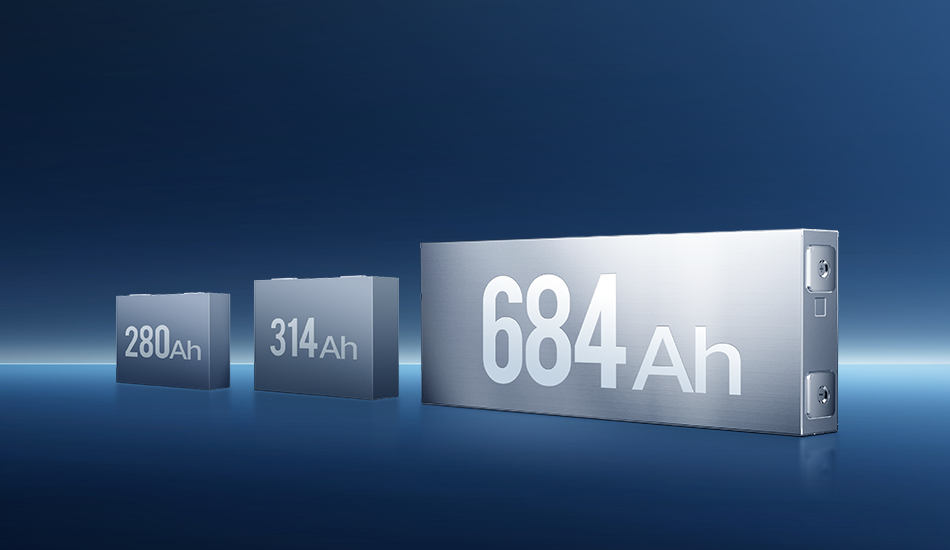
Traditional "thin-plate covering" cold plate designs are no longer sustainable. Under constraints of limited space and stringent cost control, cold plates must transcend their single function of heat dissipation and evolve towards a trinity of "structural-functional integration, ultimate heat dissipation efficiency, and system lightweighting." This article will delve into this advanced design pathway.
1-Structural-Functional Integration: The "Load-Bearing Revolution" of Cold Plates
As cell mass significantly increases, the loads borne by the enclosure baseplate and the cold plate surge dramatically. Designing the cold plate as a load-bearing structural component is the key breakthrough point for resolving the conflicts between weight, cost, and space.
a.Becoming the Enclosure's "Skeleton": Integrated Load-Bearing Baseplate
Design Concept:The cold plate no longer attaches to the enclosure baseplate; instead, it becomes the primary load-bearing structure of the enclosure itself.
Core Advantages: Significantly reduces traditional baseplates and mounting brackets, markedly lowering system weight and material costs, and simplifying the assembly process.
Technical Requirements: Must demonstrate extremely high bending, compression, and impact resistance stiffness and strength.
b. Embedding "Steel Reinforcement": Topology Optimization and Reinforcement Structures
Mechanics-Led Design: Utilize CAE simulation for topology optimization, integrating stiffening ribs, etc., within non-critical heat dissipation areas of the cold plate (e.g.flow channel gaps, edges).
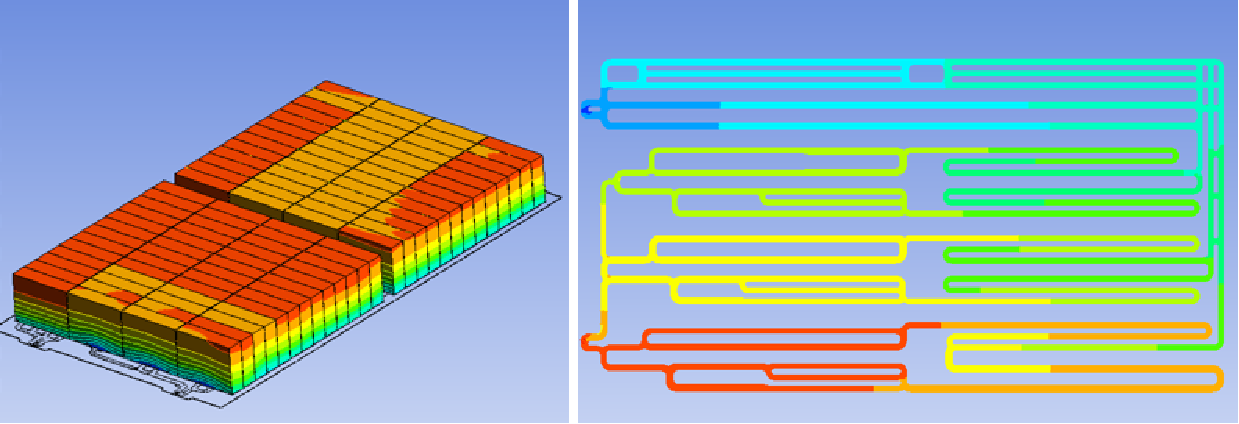
Efficient Material Utilization: Optimized design ensures material is distributed along critical stress paths, removing redundant material, achieving lightweighting while guaranteeing load-bearing capacity.
c.Module-Level Load-Bearing Platform: Consolidating Components
Large-scale, high-strength cold plates can directly serve as the mounting baseplate and load-bearing skeleton for modules. Cells or modules are fixed directly onto them, eliminating the need for additional support frames, further streamlining the structure and improving volumetric efficiency.
2-Significant improvement in heat dissipation performance: the art of balancing efficiency and equation
The core pain points of large battery cells are the difficulty in dissipating heat in the central area and controlling the overall temperature difference. The design of liquid cooled plates requires innovation from multiple dimensions including flow channels, interfaces, and materials.
a. Flow channel design: from "simple pipeline" to "intelligent blood vessel"
·Precise diversion and enhanced turbulence: Adopting a tree branch flow channel, serpentine+turbulence column/fin composite structure, to increase flow and disturbance in the high heat zone of the cell center. Avoid the "fast edge cooling and slow center cooling" caused by the straight path with large drift diameter.
·Variable cross-section and zone cooling: Based on the heat generation in different areas of the battery cell (such as center>edge), design gradient cross-section flow channels or independently controllable zone circuits to achieve precise and on-demand heat distribution, with temperature difference control up to ± 2 ℃.
·Biomimetic and Topology Optimization of Flow Channels: Utilizing CFD and topology optimization techniques to generate an efficient and low resistance "natural growth" flow channel network, maximizing heat transfer area and efficiency, and reducing pump power loss.
b. Breaking through interface thermal resistance: making "contact" tighter
·High performance interface material (TIM): research and develop high thermal conductivity (>5W/mK), low thermal resistance, long-term stable thermal conductivity gasket/gel/phase change material, and take into account insulation, cushioning and processability.
·Microstructure surface engineering: Processing micro grooves, array micro protrusions, or applying special coatings on the contact surface of the cold plate to increase the effective contact area, enhancing contact through capillary force, and significantly reducing interface thermal resistance (can be reduced by 30% -50%).
c. Material Upgrade: Dual Pursuit of Thermal Conductivity and Strength
Exploring higher thermal conductivity aluminum alloys (such as high thermal conductivity 6-series and specific 7-series alloys) or aluminum based composite materials (AMCs) while ensuring structural strength, to enhance basic thermal conductivity.
3-Lightweight throughout: a weight game where every gram is worth fighting for
Every gram of weight loss means reduced costs and improved transportation and installation efficiency.
Refined 'slimming' design:
a. Simulation driven thinning: Through precise CAE calculations, the maximum thinning of the cold plate wall thickness is achieved while meeting strength, stiffness, and heat dissipation requirements (such as reducing from 2.0mm to 1.5mm).
b. Hollow structure and hollow out: Design hollow cavities or perform safe hollow out treatment inside the reinforcing ribs and non critical areas.
c. Application of high-strength materials: Using higher strength aluminum alloys (such as 7xxx series) to achieve thickness reduction and weight reduction under the same performance.
4-Manufacturing process: the cornerstone supporting advanced design
The "structuring" and "complexity" of liquid cooled plates pose higher requirements for manufacturing processes.
Upgrading and integration of mainstream processes:
·Aluminum extrusion+Friction Stir Welding (FSW): advantages lie in large size and high structural strength. Advanced direction: Developing complex profile sections with integrated flow channels and reinforcing ribs; Breakthrough in ultra long and variable cross-section FSW welding technology to ensure weld strength and airtightness.
·Stamping+brazing: The advantage lies in flexible channel design and great potential for lightweight. Advanced direction: Achieving precision stamping of deeper and more complex flow channels; Improve the yield and joint reliability of large-sized and multi-parts-brazing; Integrate reinforced structures on stamped parts.
·High pressure die-casting: The potential lies in manufacturing highly integrated and extremely complex-shaped cold plates (with integrated flow channels, rib positions, and interface oneness) .Challenges such as mold cost, internal channel surface smoothness, and pore control should be overcome.
·Hybrid process innovation: Multi process combination innovation, integrating the advantages of different processes to meet more complex design requirements.
5-Reliability: the lifeline of integrated design
When the liquid cooled plate becomes the core of the structure, its reliability is related to the safety of the entire PACK.
Strengthen the dual reliability of "structure-fluid":
a. Extreme mechanical verification: It is necessary to simulate extreme working conditions through vibration, impact, compression, and drop tests that far exceed the standard.
b. Fatigue life guarantee: Conduct detailed structural fatigue and pressure cycle simulation and testing to ensure no leakage or cracking under long-term alternating loads.
c. Redundant sealing design: Key interfaces and the use of multiple sealing strategies.
d. Strict quality control: Introducing automated online testing to ensure manufacturing consistency.
The advanced path of energy storage liquid cooled plates is a vivid epitome of technological innovation driving industry cost reduction and efficiency improvement. Whoever can win the first place in the design competition of "structural functional integration" will have an advantage in the competition of the trillion dollar energy storage market. This silent 'bottom plate revolution' is quietly reshaping the future form of energy storage systems.
We will regularly update you on technologies and information related to thermal design and lightweighting, sharing them for your reference. Thank you for your attention to Walmate.
Scan to follow
测试测试测试测试测试测试测试测试测试测试测试测试测试测试测试测试测试测试测试测试测试测试测试测试测试测试测试测试测试测试测试测试测试测试测试测试测试测试测试测试测试测试测试测试测试测试测试测试测试测试测试测试测试测试测试测试测试测试测试
测试测试测试测试测试测试测试测试测试测试测试测试测试测试测试测试测试测试测试测试测试测试测试测试测试测试测试测试测试测试测试测试测试测试测试测试测试测试测试测试测试测试测试测试测试测试测试测试测试测试测试测试测试测试测试测试测试测试测试
测试测试测试测试测试测试测试测试测试测试测试测试测试测试测试测试测试测试测试测试测试测试测试测试测试测试测试测试测试测试测试测试测试测试测试测试测试测试测试测试测试测试测试测试测试测试测试测试测试测试测试测试测试测试测试测试测试测试测试
测试测试测试测试测试测试测试测试测试测试测试测试测试测试测试测试测试测试测试测试测试测试测试测试测试测试测试测试测试测试测试测试测试测试测试测试测试测试测试测试测试测试测试测试测试测试测试测试测试测试测试测试测试测试测试测试测试测试测试
测试测试测试测试测试测试测试测试测试测试测试测试测试测试测试测试测试测试测试测试测试测试测试测试测试测试测试测试测试测试测试测试测试测试测试测试测试测试测试测试测试测试测试测试测试测试测试测试测试测试测试测试测试测试测试测试测试测试测试
测试测试测试测试测试测试测试测试测试测试测试测试测试测试测试测试测试测试测试测试测试测试测试测试测试测试测试测试测试测试测试测试测试测试测试测试测试测试测试测试测试测试测试测试测试测试测试测试测试测试测试测试测试测试测试测试测试测试测试
测试测试测试测试测试测试测试测试测试测试测试测试测试测试测试测试测试测试测试测试测试测试测试测试测试测试测试测试测试测试测试测试测试测试测试测试测试测试测试测试测试测试测试测试测试测试测试测试测试测试测试测试测试测试测试测试测试测试测试
测试测试测试测试测试测试测试测试测试测试测试测试测试测试测试测试测试测试测试测试测试测试测试测试测试测试测试测试测试测试测试测试测试测试测试测试测试测试测试测试测试测试测试测试测试测试测试测试测试测试测试测试测试测试测试测试测试测试测试
测试测试测试测试测试测试测试测试测试测试测试测试测试测试测试测试测试测试测试测试测试测试测试测试测试测试测试测试测试测试测试测试测试测试测试测试测试测试测试测试测试测试测试测试测试测试测试测试测试测试测试测试测试测试测试测试测试测试测试
测试测试测试测试测试测试测试测试测试测试测试测试测试测试测试测试测试测试测试测试测试测试测试测试测试测试测试测试测试测试测试测试测试测试测试测试测试测试测试测试测试测试测试测试测试测试测试测试测试测试测试测试测试测试测试测试测试测试测试
测试测试测试测试测试测试测试测试测试测试测试测试测试测试测试测试测试测试测试测试测试测试测试测试测试测试测试测试测试测试测试测试测试测试测试测试测试测试测试测试测试测试测试测试测试测试测试测试测试测试测试测试测试测试测试测试测试测试测试
测试测试测试测试测试测试测试测试测试测试测试测试测试测试测试测试测试测试测试测试测试测试测试测试测试测试测试测试测试测试测试测试测试测试测试测试测试测试测试测试测试测试测试测试测试测试测试测试测试测试测试测试测试测试测试测试测试测试测试
测试测试测试测试测试测试测试测试测试测试测试测试测试测试测试测试测试测试测试测试测试测试测试测试测试测试测试测试测试测试测试测试测试测试测试测试测试测试测试测试测试测试测试测试测试测试测试测试测试测试测试测试测试测试测试测试测试测试测试
测试测试测试测试测试测试测试测试测试测试测试测试测试测试测试测试测试测试测试测试测试测试测试测试测试测试测试测试测试测试测试测试测试测试测试测试测试测试测试测试测试测试测试测试测试测试测试测试测试测试测试测试测试测试测试测试测试测试测试
测试测试测试测试测试测试测试测试测试测试测试测试测试测试测试测试测试测试测试测试测试测试测试测试测试测试测试测试测试测试测试测试测试测试测试测试测试测试测试测试测试测试测试测试测试测试测试测试测试测试测试测试测试测试测试测试测试测试测试
测试测试测试测试测试测试测试测试测试测试测试测试测试测试测试测试测试测试测试测试测试测试测试测试测试测试测试测试测试测试测试测试测试测试测试测试测试测试测试测试测试测试测试测试测试测试测试测试测试测试测试测试测试测试测试测试测试测试测试
测试测试测试测试测试测试测试测试测试测试测试测试测试测试测试测试测试测试测试测试测试测试测试测试测试测试测试测试测试测试测试测试测试测试测试测试测试测试测试测试测试测试测试测试测试测试测试测试测试测试测试测试测试测试测试测试测试测试测试
测试测试测试测试测试测试测试测试测试测试测试测试测试测试测试测试测试测试测试测试测试测试测试测试测试测试测试测试测试测试测试测试测试测试测试测试测试测试测试测试测试测试测试测试测试测试测试测试测试测试测试测试测试测试测试测试测试测试测试
测试测试测试测试测试测试测试测试测试测试测试测试测试测试测试测试测试测试测试测试测试测试测试测试测试测试测试测试测试测试测试测试测试测试测试测试测试测试测试测试测试测试测试测试测试测试测试测试测试测试测试测试测试测试测试测试测试测试测试
测试测试测试测试测试测试测试测试测试测试测试测试测试测试测试测试测试测试测试测试测试测试测试测试测试测试测试测试测试测试测试测试测试测试测试测试测试测试测试测试测试测试测试测试测试测试测试测试测试测试测试测试测试测试测试测试测试测试测试